In commercial and industrial facilities, doors affect workflow, safety, and temperature control more than most operators anticipate. Getting this decision wrong costs time and money and, in some cases, creates genuine safety risks that compound over time.
The right choice depends on understanding how different door types perform under real-world conditions. This guide toPVC swing doors covers how they work, which duty rating suits your environment, and how they compare to other common zone-separation solutions.
How Do PVC Swing Doors Work?
PVC swing doors use a pivot mechanism that opens in both directions and returns automatically to the closed position via an adjustable torsion spring, with PVC panels absorbing trolley and equipment impacts to reduce hinge stress and ongoing maintenance requirements.
Key Benefits of PVC Swing Doors
Flexible PVC swing doors deliver clear operational advantages across industrial and commercial settings:
- Hands-free, two-way operation allowing personnel and equipment to pass through without stopping
- Automatic self-closing that maintains zone separation without manual intervention
- Clear panels providing unobstructed sightlines to reduce collision risk
- Temperature separation that reduces load on refrigeration and HVAC systems
- Resistance to dust, pests, and contaminants when the door is closed
- Replaceable panels that extend frame life and reduce long-term costs
According to Safe Work Australia, maintaining clear sightlines and controlling access between zones are key hazard reduction measures in high-traffic industrial environments.
Types of PVC Swing Doors
Matching the correct duty rating to traffic type and volume is the most critical purchasing decision.
Medium Duty PVC Swing Doors
Medium-duty swing doors use an aluminium frame with 5 mm panels for foot traffic and occasional trolley use, or 7 mm panels for more frequent impacts in kitchens, food processing plants, cold storage rooms, and hospital corridors.
Heavy-Duty PVC Swing Doors
Heavy-duty PVC swing doors feature a steel frame, 7mm PVC panels, and chemically welded bumper strips at the base, designed for forklift and pallet trolley traffic with pair widths up to 3,000mm.
Transparent PVC Swing Doors
Both duty rating options include clear panels as standard, allowing staff to see through them before entering and reducing the risk of collisions in busy industrial corridors.
Where Are PVC Swing Doors Commonly Used?
PVC swing doors are used in warehouses, cold rooms, commercial kitchens, hospital corridors, food processing facilities, and retail environments requiring controlled back-of-house access.
How to Choose the Best PVC Swing Doors
Selecting the right door involves evaluating these practical factors:
- Traffic type, since forklift use requires a heavy-duty steel-framed option
- Panel thickness, with 5mm for foot traffic and 7mm where trolley impacts are frequent
- Opening dimensions to confirm the model fits the available width and height
- Temperature conditions for cold room and freezer applications
- Optional features including magnetic lock-open, opaque panels, and powder-coated frames
PVC Swing Doors vs PVC Strip Curtains
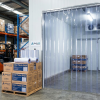
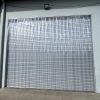
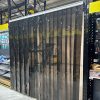
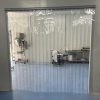
Both affordable PVC swing doors and clear PVC strip doors provide zone separation, but they suit different types of openings and traffic profiles.
| Feature | PVC Swing Doors | Clear PVC Strip Doors |
| Structure | Framed panel | Overlapping strips |
| Self-closing | Yes | Yes (by weight) |
| Forklift suitability | Heavy-duty models | Limited |
| Temperature sealing | Good | Moderate |
| Visibility | Clear panel | Clear strips |
| Best for | Defined openings | Wider or irregular openings |
Where a defined opening with consistent traffic exists, a plastic swing door provides a more controlled barrier. For wider openings needing flexible coverage, clear PVC strip doors are the better fit.
Installation and Maintenance Tips
All doors arrive pre-tensioned and require no specialist tools for installation. Routine maintenance involves lubricating the bottom pivot and lower hinge every 2 to 3 months, adjusting the spring tension as required, and cleaning the panels with warm, soapy water rather than chemical solvents.
Why Quality Matters When Buying PVC Swing Doors
Internal components should be zinc-plated for corrosion protection, frames should be powder-coated during extrusion, and panels should be thick enough to absorb repeated impacts without premature splitting. Selecting the correct specification from the outset is more cost-effective than replacing a door that fails under conditions for which it was not rated.
Making the Right Door Decision for Your Facility
PVC swing doors are a durable, low-maintenance solution for separating commercial and industrial zones. Whether the application involves a busy warehouse with daily forklift traffic, a cold storage facility, or a food processing corridor, the right door specification makes a measurable difference to operational efficiency and safety. Matching the correct duty rating and panel thickness to the demands of the environment determines long-term performance, and making the right decision from the outset avoids costly replacements later.
For tailored advice on selecting the right PVC swing door for your facility, contact the team at Austcold Industries to discuss your requirements.
Frequently Asked Questions
Are flexible PVC swing doors suitable for warehouses?
Yes, particularly the heavy-duty steel-framed option, which is specifically designed for forklift and pallet trolley traffic. The flexible PVC panels absorb impacts from vehicles and equipment, reducing stress on hinge components and extending the door's overall service life in demanding warehouse conditions.
Are PVC swing doors suitable for cold rooms?
PVC swing doors are widely used in cold storage, freezer rooms, and refrigerated environments. The self-closing mechanism maintains temperature separation between zones, and PVC panel material performs reliably across a range of low-temperature conditions. For very low-temperature applications, it is strongly recommended to confirm panel specifications with the supplier before purchasing.
Should I choose PVC swing doors or clear PVC strip doors?
PVC swing doors provide a defined, structured barrier for openings with consistent traffic. Clear PVC strip doors offer flexibility across wider openings where a framed door is impractical. Both solutions support visibility and zone separation, and the right choice depends on the dimensions and traffic profile of the specific opening.
Are PVC swing doors easy to maintain?
Yes. Routine care involves lubricating the pivot and lower hinge every 2 to 3 months, adjusting spring tension periodically as traffic conditions change, and cleaning panels with warm soapy water. Panels can be replaced independently of the frame when clarity degrades, making long-term maintenance both practical and cost-effective.