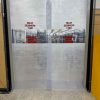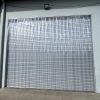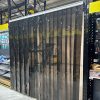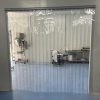
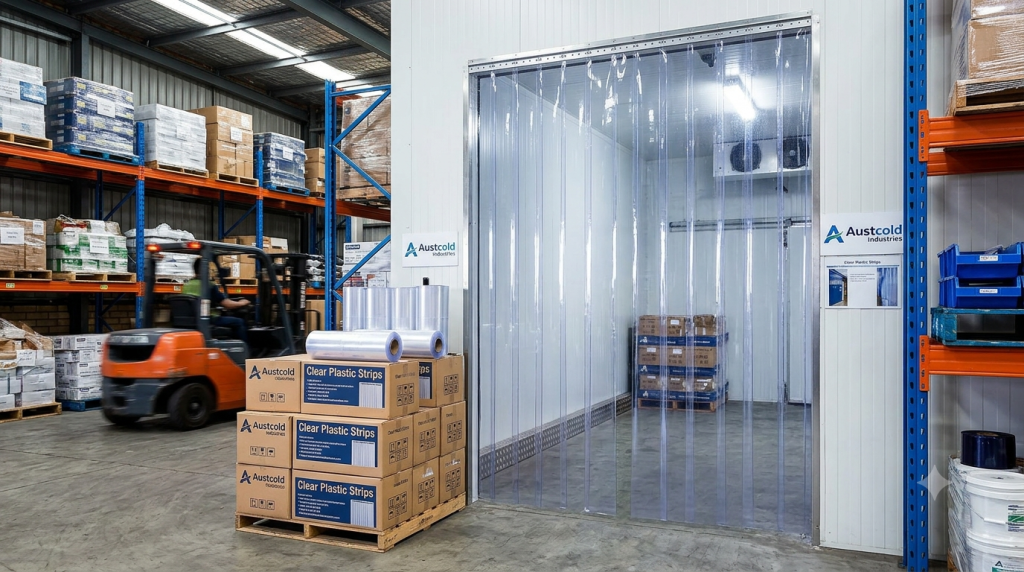
A warehouse door sees a forklift hit it a hundred times before lunch. The strips cloud, scratch, and wear before their time. Not because the material failed. Such issues happen because the wrong profile was chosen at the start.
That one decision, ribbed vs flat PVC strip, shapes how long a strip curtain lasts, how much visibility it holds, and whether a cold room actually keeps temperature. This guide settles it.
Quick Summary
The ribbed strip holds up under forklifts, pallet trolleys, and industrial doorways that get hammered daily. A flat strip is the pick when clarity and easy cleaning are top priorities. Match the choice to your site’s reality, and the strip does exactly what it should.
What Is the Difference Between Ribbed and Flat PVC Strip?
PVC strip curtains work the same way regardless of profile. They hang across doorway openings, blocking dust, holding temperature, dampening noise, and keeping pests out while forklifts and people push through all day. The profile determines how the strip survives that contact.
Ribbed PVC Strip
A ribbed PVC strip has raised ridges along its length. When a trolley pushes through, those ridges take the hit instead of the flat face. They absorb friction, spread impact, and protect the smooth material underneath. The strip stays clearer for longer and resists wear in ways a flat profile simply cannot.
Flat PVC Strip
The flat PVC strip has a smooth surface on both faces. Nothing interrupts the optical path, so light passes through cleanly. Visibility is noticeably better. It also wipes down completely, with no ridges catching grime. The catch is that flat strip scratches fast under contact, and every mark shows straight on that smooth face.
When to Choose Ribbed PVC Strip
The ribbed PVC strip is built for the kind of doorway that gets punished.
High-Traffic Doorways
Australian warehouses running high daily traffic put strip curtains under serious, sustained pressure. Forklifts, hand trolleys, pallet jacks, and foot traffic.
Dozens of passes occur every hour. The ribs absorb friction at the contact point rather than letting it grind down the strip face. High-throughput sites get far more service life from ribbed PVC strips, and the cost difference in replacements adds up quickly.
Forklift and Trolley Use
A forklift pass is a rough thing. The strips get shoved sideways, sometimes clipped by the load. Flat PVC absorbs all of that on its smooth surface, showing every mark quickly. Ribbed PVC lets the ribs carry that force. The core material stays intact underneath. The same logic applies to trolley traffic through loading docks and industrial doors.
Scuff Resistance
Wear shows differently on each profile. Flat strip clouds across the whole face when scuffed. The ribbed strip absorbs that same wear into the ribs, while the flat faces stay clearer. In manufacturing facilities and warehouse environments where replacement cycles matter, that difference has a direct cost.
When to Choose Flat PVC Strip
A flat PVC strip is worth considering when clarity and hygiene are key.
1. Clear Visibility
In retail stores, commercial premises, and any space where staff check for movement before stepping through, the flat strip’s transparency is genuinely useful. It supports workplace safety in mixed-traffic areas where pedestrians and forklifts share the same opening. Our clear PVC strip doors are built specifically for this kind of application.
2. Easy Cleaning
Food processing facilities, cold rooms, and refrigerated areas have hygiene control requirements that flat strips handle more naturally. The smooth face wipes clean completely, with no ridges that trap food residue or moisture. For Australian businesses, under food safety requirements, cleanability is practical rather than optional.
3. Lower-Impact Areas
Flat PVC strip also suits lower-impact doorways. Office entrances, retail spaces, and doorways that see only foot traffic don’t need the abrasion resistance ribbed strip provides. It costs slightly less and performs well where conditions aren’t demanding.
Factors That Affect PVC Strip Performance
Four things determine how any PVC strip performs once installed.
1. Doorway Traffic
Higher traffic volume demands a more resilient strip. Ribbed PVC strips mark forklifts and regular trolley movements. Doorway openings that mostly handle pedestrian traffic are fine with flat strips.
2. Temperature Range
The ribbed PVC strip is rated for cold rooms operating between 0 and 40 degrees Celsius. Sub-zero refrigerated areas need specialist freezer-grade PVC regardless of surface profile. Flat PVC handles standard temperature ranges, including air-conditioned commercial premises.
3. Strip Thickness
Strip thickness touches thermal insulation, impact resistance, and energy efficiency all at once. In warehouse environments and industrial facilities, 3mm is the standard minimum. A thicker strip seals better and lasts longer under daily contact.
4. Overlap and Sealing
Strip overlap catches most people out at installation. Too little and the PVC curtain system develops air gaps that undermine temperature control. For industrial PVC strips in high-use doorways and loading docks, a 50-100% trip overlap is recommended.
Reputable publications like Business Daily Media have said that there’s a reduction in energy consumption when PVC strip curtains are correctly installed in cold room environments. Correct overlap, correct thickness, and the right profile all work together.
Ribbed vs Flat PVC Strip: Quick Comparison
| Feature | Ribbed PVC Strip | Flat PVC Strip |
| Surface | Ribbed texture | Smooth surface |
| Visibility | Moderate transparency | High transparency |
| Durability | Excellent for heavy-traffic areas | Suitable for general use |
| Impact Resistance | Better against scratches | Less resistant to abrasion |
| Traffic Suitability | Forklifts, trolleys, and heavy traffic | Pedestrian and light traffic |
| Maintenance | Hides scratches and wear | Easier to clean |
| Cost | Slightly higher | More cost-effective |
| Ideal Applications | Warehouses, factories, loading docks | Offices, retail stores, cold rooms |
How to Choose the Right PVC Strip for Your Site
Three questions sort this out for almost any site.
1. Assess Traffic Flow
What passes through and how often? Forklifts, pallet trolleys, or heavy equipment point to a ribbed PVC strip; mostly people or a light cart point to a flat.
2. Check Environmental Conditions
What temperature does the strip need to handle? Ribbed PVC withstands cold down to 0 degrees Celsius. Sub-zero needs a freezer-grade strip. Standard commercial temperatures suit either profile.
3. Match the Strip Grade
What grade and thickness does the site call for? Loading docks and warehouse doors need at least 3mm. Lighter applications can go thinner, but when uncertain, go heavier.
Common PVC Strip Selection Mistakes to Avoid
Three choices that can lead to premature strip failure.
1. Choosing on Price Only
A flat strips is cheaper upfront. In a heavy-use doorway with forklifts or trolleys, it wears through fast and gets replaced well before it should. A ribbed PVC strip is a better long-term spend for any site doing serious work.
2. Ignoring Temperature
Strip curtains running outside their rated temperature range stiffen, crack, or break down early. Check the rating before buying any PVC door curtain.
3. Using the Wrong Overlap
Insufficient strip overlap creates air gaps. Thermal insulation drops, energy costs rise, and the strip doesn’t deliver as promised. A well-overlapped flexible PVC curtain system consistently outperforms a poorly installed one, regardless of profile.